Catholic Church
Small Things Like TheseThe Catholic Church stands at the intersection of faith, community dependence, and institutional power. The novel sets its public promise of equal care for all children against the treatment of girls and mothers in Church-run institutions, making the distance between religious ideals and lived care central to its moral conflict.
Institutions and Local Operations
The convent on the hill is run by the Good Shepherd Sisters, who operate both a training school providing girls with basic education and a laundry business. The laundry has a strong public reputation: restaurants, guesthouses, a nursing home, a hospital, priests, and well-off households send work there, and customers expect even heavily used linen to return looking new. This ordinary commercial trust gives the institution a secure place in local life.
The convent’s relationship with the town is also material. Eileen argues that the girls need a fire to keep warm and that the nuns pay their bills promptly, unlike customers who run up debts. Her defense does not establish what happens inside the convent; it shows how household livelihood and routine credit can make questioning the institution feel costly. The convent stands only a wall away from St Margaret’s School, a proximity Mrs Kehoe invokes when warning Bill Furlong that local girls’ prospects are inseparable from the institution’s influence.
Reputation, Secrecy, and Social Complicity
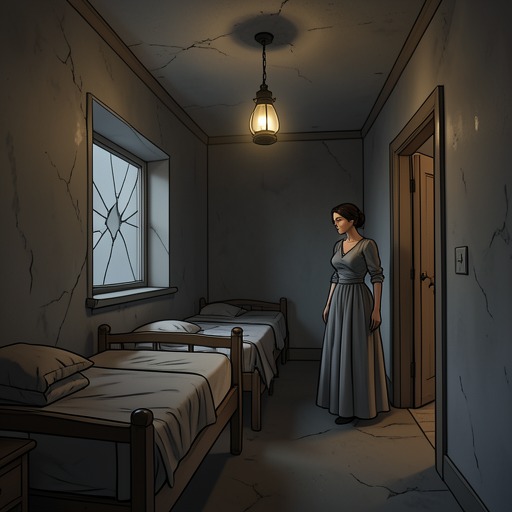
The town’s account of the convent is divided and uncertain. Some people say the so-called training-school girls are not students but young women sent there to be reformed, doing penance by washing dirty linen from dawn until night. A local nurse reportedly treated a fifteen-year-old girl for varicose veins caused by standing at wash-tubs. Other stories describe the nuns themselves as overworked, poorly fed, and restricted to silence and prayer. Further rumors liken the convent to a mother-and-baby home, alleging that unmarried girls were hidden there after childbirth and that their babies were adopted abroad for money.
These accounts are presented as town talk, not as equally verified reports: the narration cautions that much gossip could not be believed. Yet uncertainty does not erase the evidence that Furlong encounters. His discovery of a heavy, bolted door and an enclosed orchard gives the imposing convent a hidden side, while the later sight of a girl sitting dazed in its kitchen, with no food before her, turns abstract rumor into an immediate human need. When he pauses beside her and offers help, she begins to cry. The contrast is between the institution’s polished public reputation and a vulnerable person who responds intensely to an unexpected act of kindness.
Religious Practice and Moral Conflict
Catholic practice is woven into the town’s ordinary life. At Mass, children bless themselves at the marble font and genuflect into the pews; worshippers pray the rosary, make the sign of the cross, and follow familiar ritual movements. The congregation answers the priest together. The scene presents a functioning community of faith, not merely an institution viewed from outside.
For Furlong, however, the service becomes a place of moral resistance. As the sermon proceeds, he watches the Stations of the Cross, following Jesus’s suffering and death, but when the congregation goes forward for Communion he remains against the wall. His refusal to join in comes after he has witnessed the girl’s circumstances and heard Eileen argue that they should keep their distance. The ritual’s language of compassion and sacrifice thus sharpens the question of whether religious belonging can be separated from practical responsibility toward someone in distress.
Historical Record and Accountability
The book’s closing note widens the focus from the fictional convent to the history of Ireland’s Magdalene Laundries and Irish mother-and-baby homes. It states that the institutions were run and financed by the Catholic Church in concert with the Irish State. The last Magdalene laundry did not close until 1996; the number of women and girls concealed, confined, and forced to work is unknown, with ten thousand described as a modest estimate and thirty thousand as probably more accurate. Many institutional records were destroyed, lost, or made inaccessible, and the work of the women who labored there was rarely acknowledged.
The note also records the scale of infant loss and separation. It cites a report finding that nine thousand children died in eighteen investigated institutions, and notes that many mothers lost their babies. In 2014, historian Catherine Corless made public her finding that 796 babies died at the Tuam home in County Galway between 1925 and 1961. The Irish government did not issue an apology for the Magdalene laundries until Taoiseach Enda Kenny did so in 2013. These figures and delayed acts of public acknowledgment place the novel’s local encounter within a broader history of institutional power, obscured records, and belated accountability.